TJ Chambers
It’s been a busy couple of weeks since the last post, with the usual level of calls, emails, and coffee n’ consultations, but also having to diarise around an oft-conflicting number of additional meetings in Manchester, London and then Amsterdam – with the associated rail travel between them. But, as a freelancer, it’s good to be busy.
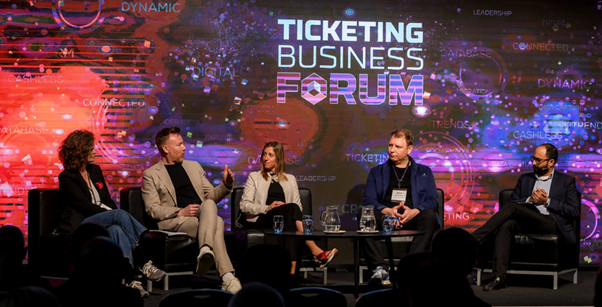
(C) Ticketing Business Forum 2026
TBF 2026
The 14th annual meeting (27th – 29th April) of the Ticketing Business Forum in Manchester (‘Connecting eCommerce and Entertainment’) brought together an international array of ticketing systems and related service technologies ranging from Consumer Identity & Verification, Data & Analytics, Event Cancellation Insurance, Payment Processing, SaaS Resale Platforms and Virtual Seating Solutions.
The assembled delegates, exhibitors and speakers included both sector specialists and operators from other industries attracted by the global scale and dynamism of the ticketing industry, as well as a healthy number of ticket-adjacent technologies, and disruptive new players from the established markets as well as the emerging ticketing territories of the Baltics, the Balkans, the Gulf States, and LATAM. Amongst the standout sessions were: ‘From Ticket to Turnstile to Till’ with Sana Ali Aamir (Fever), Vicky Cheevers (Royal International Air Tattoo), Stuart Whittick (Allianz Stadium, Twickenham), and Grant Wyatt (FEP Pay); ‘Challenging Group Think’ (panel pictured above) with Rita Namora (UEFA), Alistair Spiers (Blackpool FC), Laura Pallarés (iLUKA Collective), Steve Rimmer (Tickets for Good) and Shah-Zeib Ahmed (Glosancon Sports); Aaron Lampkin’s LA28 Olympic and Paralympic Games ticketing keynote; ‘Independent Thinking’ with Julien Gathy (Magma Collective); and, ‘Wishlists and Practicalities’ with Anthony Escott-Lawrence (Nuweb Group), Paul Bohunsky (CTS Eventim) and Sybolt Ettema (Tymes4).
There were also many discussions in the central marketplace of the conference as well as into the late hours in the local hotel bars triggered by various panel topics, and insights offered by individual contributors including ‘Green IT: Sustainable Impacts’ by Corrine Lefebvre (BILL-A), and the positivity offered by Carl-Erik Michaelsen Moberg (TicketCo) and Gabriela Gandolfini (House of Commons) during the final session ‘Outlook: Reasons to be Cheerful’.
The evolving ticketing user-experience was one constant theme, with a focus on a flexibility of service to the consumer including ticketing priced correctly for differing audience means and accessibility, i.e. not simply the crude implementation of ‘surge-pricing’; ease-of-access and event security via the digitisation of entry systems and linked personal ID; ensuring tickets are bundled with customer-relevant services i.e. F&B, merchandise, parking, or public transportation; and ticket types available throughout the period from onsale to event maturity with authorised ticket exchange and/or resale.
And, post-event Andrew Howard (https://www.linkedin.com/posts/mrajhoward_cultural-digitaltransformation-technology-activity-7456272292424183808-j-iB) provided an excellent outline of the sector debate over ticketing technology adoption, impact and responsibilities. What the industry perceives as separate but interlinked functionalities – ticket manifest management, discovery & marketing, event access & operations, payments & security etc. – but for the audience, is one ‘seamless’ ticketing experience: ‘What’s changing, and changing quickly, is that ticketing is no longer the end point of a transaction, it’s the beginning of a relationship, a living, breathing system that feeds into programming decisions, pricing strategies, marketing approaches and ultimately how we build loyalty.’
Andrew warns, ’adopting technology without clarity or insightful leadership simply creates noise’ but more positively states ‘the real shift happens when organisations are brave enough to rethink not just their tools’ but ‘trust insight without losing instinct, and to create cultures where trying, failing and learning is part of the rhythm rather than the exception.’
Other TBF conference highlights included the hospitality of the Protect Group and menta tech, and the exuberance of many of the Ticketing Business Awards winners (as voted for by their industry peers) which included Women’s EURO 2025, DynamO Pricing, UpApp, Dale Ballentine (CTS Eventim), and Fever, with the Outstanding Achievement awarded to Rita Namora (Head of Ticketing, UEFA), in recognition of her 20-year, career-defining contribution to the sector – and many, many congratulations to all the Awards winners as well as the nominees.
***
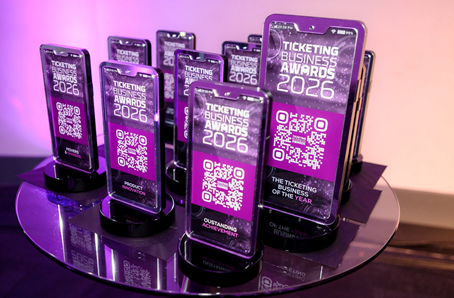
© Ticketing Business Forum 2026
The Ticketing Business Awards
In an industry which has two dominant and demanding constituencies: clients (ticket inventory suppliers) and consumers (the ticket-buyers), and is considered at best a ‘bad-news’ sector (where any and all operational mistakes are amplified, all external agencies consider themselves an ‘expert’; and where margins are continually squeezed despite the ever more sophisticated technology and service requirements), rarely (in part due to the constant agitated state or presale, onsale, upsale … and then repeat) does the sector have the opportunity (or operational perspective) to celebrate its achievements and successes or to acknowledge the individuals who ensure that time-after-time, events, experiences and spectacles as created by artists, promoters, producers, sports franchises and attractions, are reliably, repeatedly and securely provided within multi-branded ecommerce solutions and distribution channels, so that people can seamlessly gain access to the life-affirming joy of being in the presence of their cultural idol, sports star, or actress, and be elevated by the latest immersive concert, art exhibition, skate punk festival, or musical theatre revival, delivered to the correct block, row and seat, with clear guidance for accessible seating and/or viewing platforms, or directed to the right timeslot of ice-rink session, performing cast meet n’greet, immersive exhibition or their preferred VIP / hospitality zone.
Because that is what ticketing does, again, and again, and again. For millions and millions of admissions. And the event creators, client success managers, ticketing system and database administrators, anti-bot specialists, ticket-scanners, marketeers and financial controllers who all support those ticketing technologies and services rarely get any positive notice.
So, to the curmudgeonly souls who criticise these fun-and-free Ticketing Business Awards, stop being so miserably negative and join your peers in celebrating their moment of acclaim and appreciation. Or frankly just shut-the-f*** up. It’s tired and betrays a meanness of spirit.
***
Lastly, and in other news, the ‘summer sale’ announcement by Live Nation, and the ‘fever of blue dots’ i.e. unsold ticket inventory.
On the 28th April Live Nation launched its (now annual) ‘Summer of Live’ $30 ticket deal (https://www.livenation.com/promotion/summeroflive) incorporating over 4,000 shows in the US involving artists such as Avenged Sevenfold, Evanescence, Charlie Puth, 5 Seconds of Summer, Good Charlotte, Guns N’ Roses, Iron Maiden, James Taylor, John Mulaney, Kali Uchis, Kesha, Kid Cudi, Lil Wayne, Luke Bryan, Mötley Crüe, Mt. Joy, Paul Simon, Pitbull, Pussycat Dolls, Rod Stewart, Santana, Tim McGraw, ‘Weird Al’ Yankovic, The Wu-Tang Clan, Zayn, and many, many more.
This discounted ticket offer was available for one week only (ending 5th May 2026) with the argument being that this promotion was a strategic, limited-time marketing campaign targeted at casual buyers rather than indicative of weak market demand.
That the limited inventory offered would in fact stimulate extra sales without lowering the core event ticket pricing, and that the increased media coverage of this promotion would drive incremental event discovery, and thus lead to an increased volume of attendees, thereby helping to drive incremental revenues from F&B and/or merchandise concessions, car parking and other ancillaries.
With a counter view being (as Dave Wakeman has long stated) ‘Discounts Are For Dummies’ – see original article from 2017: https://www.linkedin.com/pulse/let-put-bluntly-discounts-dummies-dave-wakeman/.
But if are there any other market signals of weak ticket sales, including cancelled tours or those events with identifiable numbers of unsold inventory, then the Live Nation promotion might be viewed less positively and perhaps could be interpreted as more indicative of a by-product of the challenging cost-of-living environment being experienced by many would-be ticket-buyers.
Blue Dot Fever
Bob Lefsetz in his newsletter (Stiff Tours, 4th May 2026 – https://lefsetz.com/wordpress/2026/05/01/stiff-tours/) noted that Kid Rock’s show at the Dos Equis Pavilion had ‘a sea of blue dots on the Ticketmaster app. I’d put it at around 30% unsold.’
The Pussycat Dolls announced that they were cancelling all but one show in North America after ‘taking an honest look’ at the run (Why Millennial Pop Stars Are Catching ‘Blue Dot Fever’,Rachael O’Connor, 6th May 2026 – https://www.newsweek.com/entertainment/blue-dot-fever-millennial-nostalgia-11918732), which came after Post Malone with Jelly Roll, Zayn and Meghan Trainor had called off part or all of their tours (Pussycat Dolls Cancel Reunion Tour in North America After ‘Taking an Honest Look’ at Weak Ticket Sales, Chris Willman, 4th May 2026 – https://variety.com/2026/music/news/pussycat-dolls-cancel-reunion-tour-1236737087/).
The behavioural impact of ‘blue dots’ (a reference to the blue dots used to represent unsold and available seats on Ticketmaster seat-maps) apparently informed some would-be ticket-buyers to decide that the event wasn’t worth attending, i.e. the number of blue dots driving down sales, or more succinctly ‘empty seats sell more empty seats’.
And so, the term ‘blue dot fever’ became a media trope, with a direct narrative linkage to the ever-higher price of tickets with ‘affordability going to start affecting concerts’. (And obviously not a by-product of the trend for consumers to buy tickets later in the onsale process.)
Whereas artists continued to insist that the key issues impacting events are the inflationary costs of production, staffing and touring logistics (What Is ‘Blue Dot Fever’? Empty Ticketmaster Seating Maps Are Suddenly Trending, Ashley King 6th May 2026 – https://www.digitalmusicnews.com/2026/05/06/what-is-blue-dot-fever/) whilst promoters continue to announce growing revenues – with Live Nation Entertainment reporting a 12% Y-O-Y growth in their Q1 2026 results (Live Nation Entertainment Reports First Quarter 2026 Results, 5th May 2026 – https://newsroom.livenation.com/news/live-nation-entertainment-reports-first-quarter-2026-results/).
See also: ‘Blue Dot Fever: Why are so many artists cancelling tours?’ Joe Taysom, 7th May 2026 – https://faroutmagazine.co.uk/blue-dot-fever-why-are-artists-cancelling-tours/, and ‘Blue Dot Fever: When Tours Can’t Sell, They Bail’, Kiana Fitzgerald, 8th May 2026 – https://consequence.net/2026/05/blue-dot-fever-tour-cancellations/3/.
And then Randy Nichols, noted artist manager and music tech advisor, announced a contrarian analysis (‘Blue Dot Fever is a scalper narrative. Don’t fall for it.’, 8th May 2026 – https://www.linkedin.com/pulse/blue-dot-fever-scalper-narrative-dont-fall-randy-nichols-v9p0e/) and further suggested that ‘Blue Dot Fever didn’t originate with fans. It spread from scalper Twitter’.
Further, Randy stated that event cancellation rates were actually pretty normal i.e. 1%-2%.
So, no problem then.
And obviously no linkage to the announcement by Ticketmaster to make 8% of its workforce redundant (Ticketmaster Cuts 8% Of Staff, 350 Employees Primarily In Engineering, Product & Design, Andy Gensler, 6th May 2026 – https://news.pollstar.com/2026/05/06/ticketmaster-cuts-8-of-staff-350-employees-primarily-in-engineering-product-design/).
***
Until the next time.

